

New Aged Care Act
Understanding the Aged Care Act 2024
The Australian government’s new Aged Care Act and Strengthened Aged Care Quality Standards came into effect on 1 November 2025.
The Act and Strengthened Standards focus on empowering older people, increasing protections and offering more choice across care and services. The changes aim to improve the safety, dignity, and quality of life for older people by making our aged care sector more measurable, person-centred, and responsive to diverse needs.
Opal Healthcare welcomed these changes, as our values and the way we work have always placed our residents, their preferences and relationships at the centre of their care.
This overview will help you understand what these reforms might mean for you and your loved ones.
Key changes and what they mean for older Australians
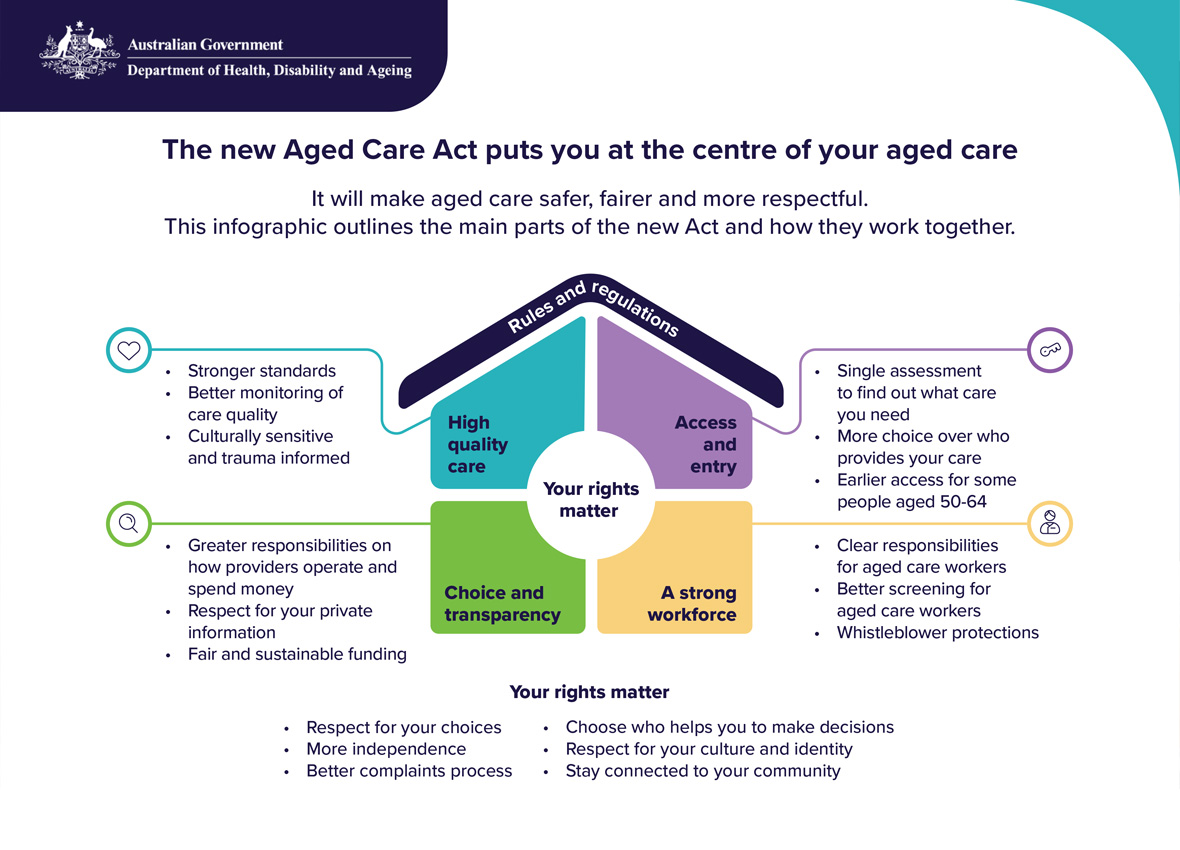
The Statement of Rights
The new Act included a Statement of Rights outlining the rights that older people have when accessing aged care services. This replaced the Charter of Aged Care Rights.
The Statement of Rights includes the right for every individual to have:
- Independence, autonomy, empowerment and freedom of choice
- Equitable access
- Quality and safe funded aged care services
- Respect for privacy and information
- Person-centred communication and the ability to raise issues without reprisal
- Advocates, significant persons and social connections.
To read a plain language summary of the new Statement of Rights, click here.
The Strengthened Standards
The Aged Care Quality Standards are a set of requirements that define and reflect the quality of care older people should expect. The Standards were strengthened in 2025 alongside the new Act. The Standards have been implemented at our Care Communities and are closely aligned with our model of care.
Read more about the Strengthened Standards, here.
Fees and Funding
In Australia, the amount you pay for your aged care depends on your personal and financial circumstances. The Government funds most aged care services, but those who can afford to contribute to the cost of their care are required to do so according to their assessed means.
The new fees and funding model that began on 1 November is designed to make costs clearer and more consistent. Any contributions you might make to the costs of your care are still based on your financial circumstances and the type of support you choose.
Because fees vary from person to person, the My Aged Care Fee Estimator is the best way to understand what your own costs may look like. Our team can help you interpret the results and talk through your options so you can plan with confidence.
Registered Supporters
Since 1 November 2025, older people now have the option to nominate and register a 'Supporter’. Registered Supporters can help residents understand, make, and communicate decisions about their care. A registered supporter can be a trusted family member or friend who can help you make decisions – but they can’t make decisions on your behalf.
This is intended to ensure older people can make their own decisions, and maintain control over their own lives, for longer. Click here to see more.
Whistleblower protections
The new Act makes it easier for people to come forward with concerns about misconduct or harm, and to ensure they’re protected when they do. Residents, family and anyone of significance to a resident can make a disclosure as a whistleblower. These disclosures can also be made to a wide group of people. Click here to see more.
Resources and guidance
How to stay updated:
If you have questions about how the Act may affect you or someone close to you, please speak with your General Manager, contact your local Opal HealthCare Care Community, or reach out via our website enquiry form for support.
Commonly asked questions about the new Aged Care Act
-
The Australian Government’s New Aged Care Act and Strengthened Aged Care Quality Standards came into effect on Saturday, 1 November 2025.
-
The Aged Care Act 2024 is a modern legislative framework designed to improve the aged care system in Australia. It replaced the Aged Care Act 1997 and focuses on empowering older people, increasing protections and offering more choice across care and services.
-
The Aged Care Quality and Safety Commission is the national regulator of aged care services. It ensures that providers meet quality and safety standards, manages complaints and serious incidents, and monitors provider performance and compliance.
-
The aged care system is currently governed by several laws including the Aged Care Act 2024. On 1 November, this replaced the Aged Care Act 1997 and the Aged Care Quality and Safety Commission Act 2018.
-
The Aged Care Act 1997 was the primary legislation for government-funded aged care for over two decades. It outlined the structure for aged care funding, provider responsibilities, and consumer rights. It was repealed when the new Aged Care Act 2024 came into effect on Saturday, 1 November 2025.
-
The Aged Care Quality Standards are a set of requirements that define what good care looks like and reflect the quality of care older people should expect. The current seven standards are:
-
The new Act includes a Statement of Rights outlining the rights that older people have when accessing aged care services. This will replace the current Charter of Rights.
The Statement of Rights includes the right for every individual to have:
- Independence, autonomy, empowerment and freedom of choice
- Equitable access
- Quality and safe funded aged care services
- Respect for privacy and information
- Person-centred communication and the ability to raise issues without reprisal
- Advocates, significant persons and social connections.
To read a plain language summary of the new Statement of Rights, click here.
-
In Australia, the amount you pay for your aged care depends on your personal and financial circumstances. The Government funds most aged care services, but those who can afford to contribute to the cost of their care are required to do so according to their assessed means.
If you entered permanent residential aged care before 1 November 2025, there will be no changes to your fees.
For older people who enter permanent care after 1 November 2025, fees and charges will vary depending on your personal circumstances.
-
The higher everyday living fee (HELF) is an optional fee for people who choose to receive higher-quality everyday living services in permanent or respite residential aged care. This enables people to tailor additional services to suit them.
-
Older people now have the option to nominate and register a 'Supporter’. Registered Supporters can help residents understand, make, and communicate decisions about their care. This is intended to ensure older people can make their own decisions, and maintain control over their own lives, for longer. Click here to see more.
-
A Registered Supporter can be a trusted person chosen by the resident. This could be a family member, friend, or someone else significant in their life, as long as they are nominated and registered appropriately.
-
The new Aged Care Act makes it easier for people to come forward with concerns about misconduct or harm, and to ensure they’re protected when they do. From 1 November 2025, residents, family and anyone of significance to a resident can make a disclosure as a whistleblower. These disclosures can also be made to a wide group of people. Click here to see more.
-
At Opal HealthCare, our residents are at the centre of everything we do.
While our ways of working and delivery of care were already strongly aligned with the incoming reforms, we also:
- Implemented training for our team to ensure we’re well prepared for the changes
- Co-ordinated our systems and processes with new regulations
- Ensured our day-to-day delivery of excellent care is in line with the Strengthened Standards
- Communicated with our residents and their families so they understand the changes relevant to them